Comparing the options: which is right for your roof
With both options understood, a Clarks Hill owner can weigh them to determine which is right, though the existing roof's condition and code often guide the decision. Several considerations shape the comparison.
The existing roof's condition is decisive
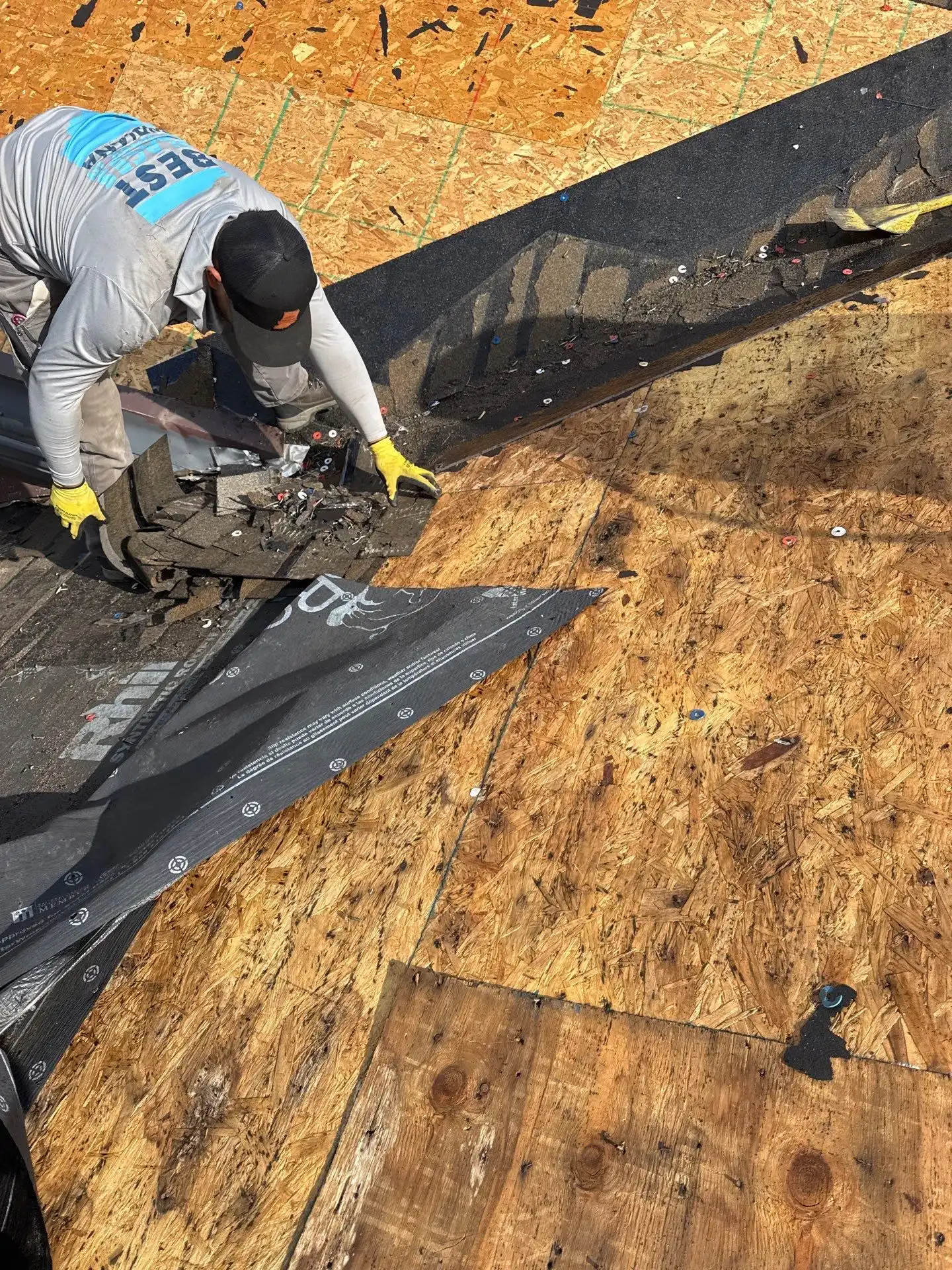
The existing roof's condition often decides the choice, since reroofing requires a sound, dry roof beneath, while hidden problems like wet insulation make a tear off necessary to address them. The condition can rule out reroofing. For a roof, if the existing roof has moisture or deck problems, a tear off is required regardless of the cost savings reroofing would offer, while a sound beneath roof opens up reroofing as an option, making the existing condition the first and often decisive factor.
Code layer limits
Building codes limit the number of roof layers, often to two, so a roof that already has the maximum layers requires a tear off, since another reroof would violate code. The layer count can mandate a tear off. For a Tippecanoe County roof, checking the existing layer count against code is essential, since a roof at the maximum cannot be reroofed and must be torn off, which is a practical constraint that, like the condition, can determine the choice independent of cost preferences.
Cost and disruption versus thoroughness
When both options are available, the tradeoff is reroofing's lower cost and less disruption versus a tear off's thoroughness and reliable long term result. The owner weighs the savings against the more complete approach. For a Clarks Hill roof where reroofing is suitable, the decision balances the cost and disruption savings of reroofing against the fresh foundation and thoroughness of a tear off, with the owner's priorities, budget, and how long the building will be held factoring into which tradeoff makes sense.
The long term result
The long term result differs, with a tear off generally giving the most reliable foundation for the new roof's full life, while a properly done reroof over a sound roof can also perform well but builds on the existing roof. The thoroughness affects the long term outcome. For a roof, an owner prioritizing the most reliable long term result may favor a tear off even when reroofing is available, while one capturing the savings on a sound roof may reasonably choose reroofing, depending on the priorities for the roof's future.
The condition and code often decide
The choice between reroofing and a tear off is often decided by the existing roof's condition and the code layer limits, with hidden problems or maxed layers requiring a tear off, and a sound beneath roof within the layer limit allowing reroofing's savings. For a Tippecanoe County owner, the right option follows the roof's actual condition and code first, then the cost versus thoroughness tradeoff where both are available, which an assessment clarifies.
Determine the right option for your roof
The broader point about reroofing versus a tear off is that the existing roof's condition usually drives the decision more than cost preference, since building over a roof with hidden moisture simply traps the problem beneath a new roof. A Clarks Hill owner who lets a thorough inspection, including core samples, establish what is actually beneath the roof gets the right answer, whether that captures reroofing's savings or requires a tear off's thoroughness. The condition is the fact that matters, and discovering it before choosing is what prevents an expensive mistake.
Finally, where both options are genuinely available, the choice comes down to weighing reroofing's real savings against a tear off's more reliable long term result, in light of how long the building will be held. A owner planning to keep the building for decades may favor the fresh foundation of a tear off, while one capturing savings on a sound roof may reasonably reroof. That tradeoff, grounded in the roof's condition and the owner's horizon, is the heart of the decision once condition and code allow both paths.
It also helps to remember that code constraints can decide the matter regardless of what an owner would prefer, because a roof already at the maximum layers must be torn off no matter how sound it is. A Tippecanoe County owner who confirms the layer count and code requirements up front avoids planning around an option that is not actually available. Between the existing condition and the code limits, the choice is often narrowed before cost even enters, which is why verifying both early is the practical starting point for the decision.
The broader point about reroofing versus a tear off is that the existing roof's condition usually drives the decision more than cost preference, since building over a roof with hidden moisture simply traps the problem beneath a new roof. A Clarks Hill owner who lets a thorough inspection, including core samples, establish what is actually beneath the roof gets the right answer, whether that captures reroofing's savings or requires a tear off's thoroughness. The condition is the fact that matters, and discovering it before choosing is what prevents an expensive mistake.
Finally, where both options are genuinely available, the choice comes down to weighing reroofing's real savings against a tear off's more reliable long term result, in light of how long the building will be held. A owner planning to keep the building for decades may favor the fresh foundation of a tear off, while one capturing savings on a sound roof may reasonably reroof. That tradeoff, grounded in the roof's condition and the owner's horizon, is the heart of the decision once condition and code allow both paths.
It also helps to remember that code constraints can decide the matter regardless of what an owner would prefer, because a roof already at the maximum layers must be torn off no matter how sound it is. A Tippecanoe County owner who confirms the layer count and code requirements up front avoids planning around an option that is not actually available. Between the existing condition and the code limits, the choice is often narrowed before cost even enters, which is why verifying both early is the practical starting point for the decision.
The broader point about reroofing versus a tear off is that the existing roof's condition usually drives the decision more than cost preference, since building over a roof with hidden moisture simply traps the problem beneath a new roof. A Clarks Hill owner who lets a thorough inspection, including core samples, establish what is actually beneath the roof gets the right answer, whether that captures reroofing's savings or requires a tear off's thoroughness. The condition is the fact that matters, and discovering it before choosing is what prevents an expensive mistake.
Clarks Hill Commercial Roofing assesses your Clarks Hill roof's condition and code situation to determine whether reroofing or a tear off is right. Call (765) 676-3491 to determine the right option for your roof. Choosing correctly is what separates a smart investment from an expensive guess.